Dragon Ball

Dragon Ball

ドラゴンボール
1986 -1989 Toei Animation Fuji TV 153 episodes Completed
Action Adventure Comedy Martial Arts
Details & Synopsis
Before the Saiyans. Before Namek. Before power levels meant anything at all, there was a kid with a tail, a talking pig, and a treasure hunt.
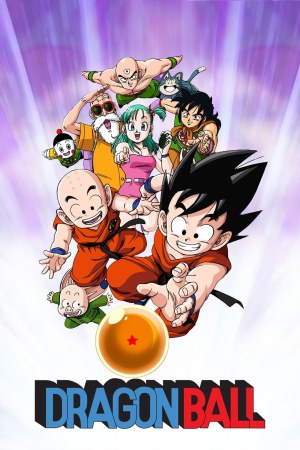
Son Goku is not the hero yet. He is a wild child raised alone in the mountains, strong enough to punch through boulders and naive enough to think Bulma's bra is some kind of helmet. When Bulma shows up hunting the seven Dragon Balls, Goku tags along, and what starts as a road trip comedy slowly, patiently, becomes the blueprint every shonen series after it would spend decades copying.
Produced by Toei Animation from Akira Toriyama's manga, Dragon Ball aired on Fuji TV from 1986 to 1989. 153 episodes that build Goku from a feral kid who has never seen a car into a genuine martial artist under Master Roshi's training, through two World Martial Arts Tournaments that establish the cast, Krillin, Yamcha, Tien, Chiaotzu, who would carry the entire back half of the franchise. Then Piccolo Daimao arrives, and the show that started as slapstick adventure comedy pivots into something considerably darker, ending on a cliffhanger that walks directly into the story everyone actually remembers.
This is the part people skip. That is a mistake. Every rule Dragon Ball Z would spend 291 episodes escalating, the tournaments, the training arcs, the villain who turns ally, the power that comes from pushing past your limit, gets written here first, at a fraction of the stakes and twice the charm. Goku punching a dinosaur because he is hungry. The Kamehameha as a discovery, not a signature move yet. Before he was the strongest fighter in the universe, he was just a kid who wanted to eat.
Watch this first. Or watch it after Z, once you already love him, and see where all of it actually started.
Alt Title ドラゴンボール
Studio Toei Animation
Network Fuji TV
Aired 1986 - 1989
Episodes 153
Genre Action, Adventure, Comedy, Martial Arts
Status Completed

Dragon Balls & Shenron

Archival overview

Original Dragon Ball · The rules before later upgrades

The Dragon Balls begin as the entire reason Dragon Ball moves. Bulma builds a radar to find them, Goku leaves Mount Paozu because of them, and villains from Pilaf to King Piccolo keep discovering that seven little objects can reorganize the world.

The important thing while watching original Dragon Ball is that Shenron's rules are still narrow. Earth has one set of Dragon Balls, one wish per summon, and a Guardian whose life is tied to whether they function at all. Later series expand the system, but this page stays with the rules the 1986 anime is actually using.
Why it matters
Early Dragon Ball can build whole adventures around finding one missing ball because the wish system still has friction. The Dragon Balls are not yet an emergency button sitting in the background. They are the plot.

The Earth Dragon Balls

Kami · Earth's Guardian · Shenron
Original Dragon Ball eventually reveals that Earth's Dragon Balls exist because Kami created them and that Shenron's existence is tied to Earth's Guardian. The later explanation for how Kami possesses that ability belongs to DBZ; at this point in the anime, the important discovery is simpler: the world's great wish-granting relic is maintained by someone.

That makes the Dragon Balls less like naturally occurring treasure and more like part of Earth's divine infrastructure.
The Breakdown
Find all seven, bring them together, summon Shenron and make one wish. When Kami is gone, that entire system can go with him.

Single wish limitation

One wish per summon

Earth's original Dragon Balls grant one wish when Shenron is summoned. Once that wish is completed, the balls scatter and the hunt has to begin again.

That sounds simple, but it shapes the entire early series. There is no queue of backup wishes. If somebody wastes the wish, steals it, or reaches Shenron first, everyone else waits another year.
Why it matters
The one-wish limit is why Oolong interrupting Pilaf is such a complete victory and why later resurrection plans have to be thought through instead of simply asking Shenron to fix everything at once.

The dormancy period

One year as stone

After Shenron grants a wish, the Dragon Balls scatter across Earth and become inert stone for one year. The Dragon Radar cannot turn that waiting period into another adventure immediately; the magic itself is unavailable.

Early Dragon Ball therefore treats a completed wish as the end of a cycle. Characters can gather the balls quickly if they know where they are, but they cannot skip the cooldown.
What changed
Later Dragon Ball stories introduce other sets of Dragon Balls and revised rules. Original Dragon Ball is built around this much tighter rhythm.

The resurrection paradox

Original Earth resurrection rules

Resurrection is powerful, but Earth's original Shenron is not unlimited. The same person cannot simply be brought back over and over under Kami's original rules, and Shenron cannot exceed the limits of the power that created him.

That distinction becomes important as Dragon Ball moves from accidents and individual deaths toward enemies powerful enough to challenge the divine system itself.
Why it matters
The Dragon Balls reduce the finality of death, but early Dragon Ball still gives the wish system boundaries. The story can threaten the mechanism, exhaust its rules, or put characters in situations Shenron cannot casually solve.

The inertia effect

SPOILER!

Kami lives · Shenron lives

King Piccolo attacks the Dragon Balls at their source. After using Shenron to restore his youth, he kills the dragon so nobody can immediately use the same system against him.

The crisis eventually leads Goku to Kami, where the deeper rule becomes clear: Earth's Dragon Balls and Shenron depend on the Guardian who created them. If Kami dies, the Dragon Balls become useless stone.
What changed
For the first time, Dragon Ball makes the wish system itself vulnerable. Beating the villain is no longer automatically followed by gathering seven balls and repairing the damage.