
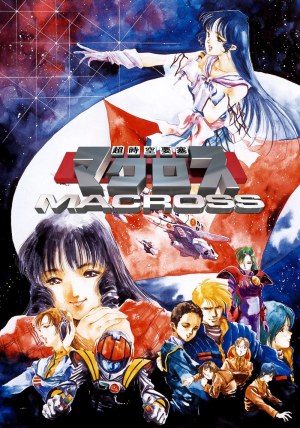
Super Dimension Fortress Macross

Super Dimension Fortress Macross

超時空要塞マクロス
1982 -1983 Tatsunoko Production / Studio Nue MBS 36 episodes Completed
Action Mecha Sci-Fi Romance Musical
Details & Synopsis
In 1999, an alien warship crashes on a remote island and humanity spends a decade reverse-engineering technology it barely understands. In 2009, the ship, rebuilt and renamed the Macross, launches on its maiden voyage. The aliens it came from show up the same day to reclaim it. What follows is a two-year war fought across the solar system, inside a city-sized battlefortress, between a civilization of giant humanoids and a species of smaller ones who discovered something the Zentradi never had: culture.

Produced by Tatsunoko Production and Studio Nue, Super Dimension Fortress Macross aired on MBS from 1982 to 1983. Thirty-six episodes that invented conventions the mecha genre is still running on today. The love triangle between ace pilot Hikaru Ichijyo, pop idol Lynn Minmay, and officer Misa Hayase is still being argued about. The variable fighters, transforming from jet to humanoid to attack mode, set a template that Transformers would borrow and Gundam would spend decades trying to answer. The moment a song stops a war is still one of the most quietly radical ideas ever animated.

In the West, Macross was chopped up, merged with two unrelated series, and released as Robotech in 1985. Harmony Gold then spent thirty years using that license to block official Macross releases outside Japan. Fans distributed fansubs of the original specifically as an act of reclamation. The history of how Westerners actually saw this show is inseparable from the history of fansub culture itself.

Watch the original. Watch Do You Remember Love? immediately after. Then watch Macross Plus and understand why Shinichiro Watanabe made Cowboy Bebop the way he did.
Alt Title 超時空要塞マクロス
Studio Tatsunoko Production / Studio Nue
Network MBS
Aired 1982 - 1983
Episodes 36
Genre Action, Mecha, Sci-Fi, Romance, Musical
Status Completed

Music Production & Tracks

Watashi no Kare wa Pilot Turns an Idol Song Into Military Confusion

Minmay's signature song becomes part of the Zentradi culture shock

"Watashi no Kare wa Pilot" is one of Minmay's defining songs inside the series, performed by Mari Iijima as Minmay.

Its military importance is something the characters discover after the fact. To the Macross civilians it is pop music. To Zentradi listeners encountering civilian entertainment for the first time, the performance is another piece of an incomprehensible culture.
Why it matters
Macross keeps the order important: the song exists because people make music, not because the military needed a weapon.

0-G Love and Shao Pai Long Show Minmay Becoming a Media Star

Pop performances · movie stardom · Macross City entertainment

Songs such as "0-G Love" and "Shao Pai Long" belong to the period when Minmay's career expands beyond the Miss Macross contest into a full entertainment phenomenon aboard the ship.

"Shao Pai Long" is tied to the movie in which Minmay stars, turning the Macross's improvised civilian culture into something large enough to produce its own celebrities and pop mythology.
Why it matters
These songs help show that Macross City is not merely surviving inside a battleship. Its people are rebuilding an actual culture while the war continues outside.

Ai wa Nagareru Carries the Television Series' Episode 27 Climax

Minmay sings while the Macross and allied Zentradi fight for Earth

"Ai wa Nagareru" accompanies the climactic battle of Episode 27 as Minmay sings and the Macross fights alongside Zentradi who have chosen to reject Boddole Zer's order of annihilation.
What changed
By this point Minmay's music is no longer simply shocking because it is unfamiliar. It represents the civilian life the allied Zentradi now understand they could lose.

Kentaro Haneda Gives Macross Both War Music and Intimacy

Orchestral action · melancholy · comedy · pop woven into the same series

Kentaro Haneda composed the television score, giving Macross a musical language that can move from large military action to romance, comedy and loss without making those parts feel like different shows.
Why it matters
Macross is built around the collision of ordinary life and enormous warfare. Haneda's score helps both scales coexist, while Minmay's songs can remain recognizably pop music inside that larger dramatic soundscape.

Macross Opens Like a War Story and Runner Ends Like a Memory

Opening theme: Macross · ending theme: Runner

The opening theme "Macross," sung by Makoto Fujiwara, presents the series with the scale and forward motion of a space-war adventure.

"Runner" closes episodes on a much more reflective note, emphasizing distance, memory and the people carried through the conflict.
Why it matters
That contrast fits the series itself. Macross can stage enormous fleet battles and still end by asking what those events felt like to the people living through them.

Dog Fighter Is the Sound of a Valkyrie Fight in Motion

Fast percussion · brass · transformation and pursuit

"Dog Fighter" is one of the score's most recognizable action pieces, repeatedly associated with fast Valkyrie combat.

Its momentum suits the way Macross animates air battles: aircraft cross the frame, transform, brake, turn and accelerate again rather than standing still to trade attacks.
Why it matters
The track helps make the Valkyrie feel like a machine built from aviation first and giant-robot spectacle second.