
9/10Watch

Death Note Episode 25 Review: Silence.
For twenty-four episodes, Death Note asks one question: which of these two men finally beats the other? Episode 25 answers it, and the answer is not a better deduction. Light never fools L into believing he is innocent. L is still suspicious, still pulling at the loose threads in the notebook's rules, and still moving toward the one experiment that would destroy Light's alibi. Light wins because he understands something L can never turn into evidence: Rem loves Misa enough to die for her.So Light builds a situation where Rem has exactly two choices. Let L catch Misa, or kill him.
Where it came from
"Silence" adapts the end of the manga's first great Light-versus-L battle, reaching the events of Chapter 58. The outcome belongs to Tsugumi Ohba and Takeshi Obata: Light puts Misa back in danger on purpose, L moves to test the fake thirteen-day rule, Rem realizes she has been trapped, and Watari and L both die when she writes their names.The anime does not simply copy those pages. Series composer Toshiki Inoue wrote the script, series director Tetsurō Araki storyboarded it himself, Mitsuyuki Masuhara directed at episode level, and Takahiro Kagami and Hideki Inoue handled animation direction. Araki takes the manga's abrupt turning point and builds a funeral around a man who is still alive.
It starts before anyone dies. The episode keeps returning to bells, rain and quiet, the sense that L knows something has shifted even if he cannot say how it ends.
The trap closes
Light's victory here is one of the nastiest things he does in the series, because almost everyone involved understands only part of the plan. With Higuchi dead and her memories back, Misa starts killing criminals again on Light's orders. To L, that looks like the Second Kira pattern returning almost the moment Misa walked free. He never accepted Light and Misa's innocence, and now his suspicion has somewhere to go.The obstacle is the thirteen-day rule. Light wrote it into the notebook himself: a user must keep writing names at least once every thirteen days or die. Light and Misa survived far longer than that in confinement, so the rule appears to clear them both. L never fully accepted it, and now he decides to test it.
That is the moment Rem sees the whole design. If the rule is exposed as fake, suspicion lands straight back on Misa, and L will keep pulling until she is caught, imprisoned or executed. Light knows Rem will never allow that. He does not need to order Rem to kill L. He only has to make keeping L alive incompatible with keeping Misa safe.
Light turns Rem's love into a murder weapon. It is brilliant strategy, but it is not a clean intellectual victory. Light does not prove himself the better detective. He slides a piece onto the board that L cannot account for, because its next move is emotional rather than logical. Rem knows exactly what Light has done to her, and she does it anyway.
The rain
Before the trap springs, the anime stops. Light finds L alone on the roof in pouring rain. L is quieter than usual and says he hears bells. He talks about people lying and asks whether Light has ever told the truth in his life. Light answers the way Light always does, calm and plausible, giving L nothing. L no longer sounds like a detective running an interrogation. He sounds tired.The tempting read is that L knows for certain Light is Kira and has accepted his own death. The episode doesn't support that. L goes back downstairs and keeps investigating. He still plans to run the thirteen-day test. He hasn't surrendered. What he understands is that something is wrong: his case says Light is Kira, the evidence says he isn't, and closing that gap means pushing harder than he ever has. The rooftop gives him a few minutes to stop being the machine that solves cases and look at the person he has spent months trying to expose.
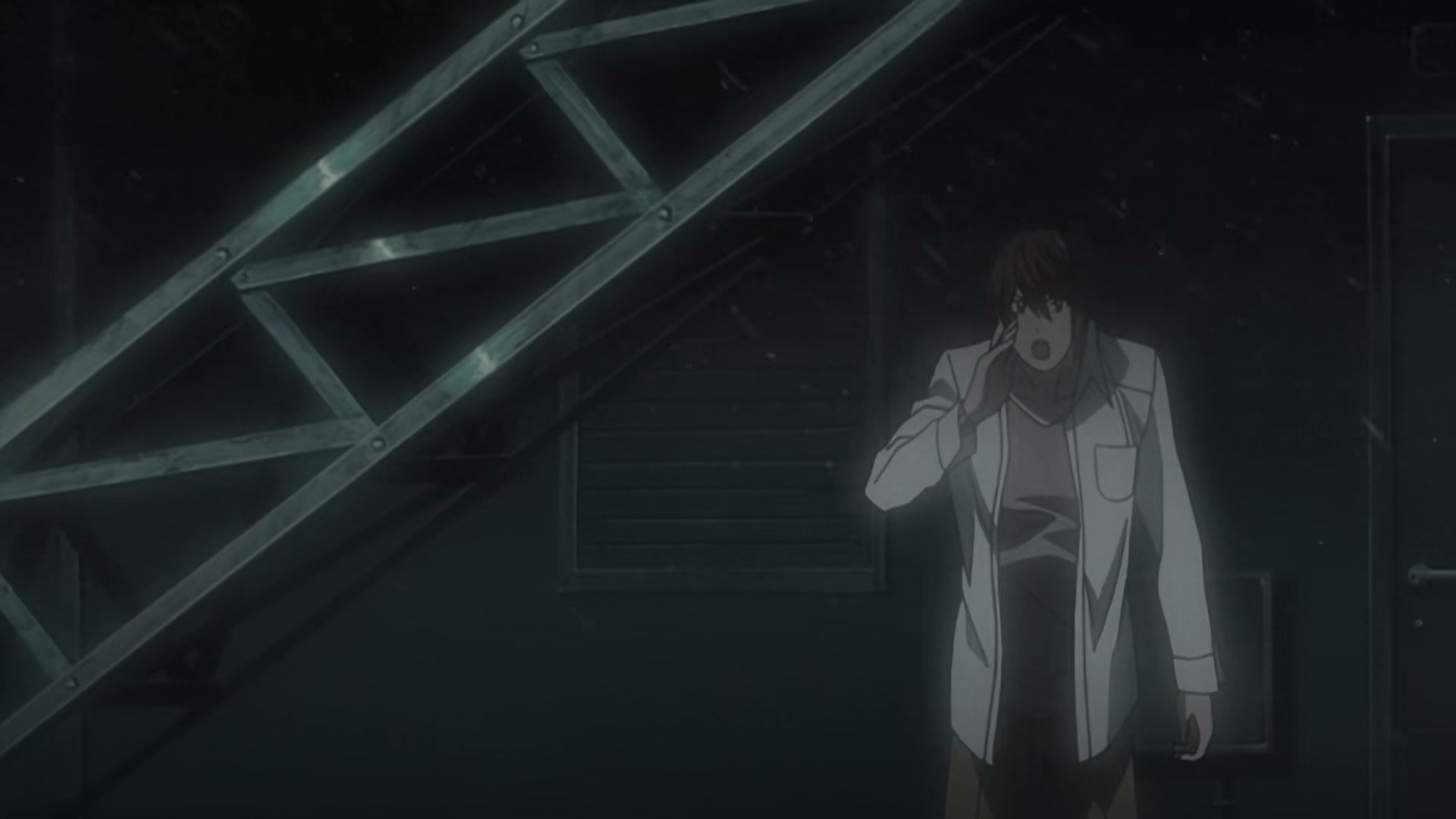
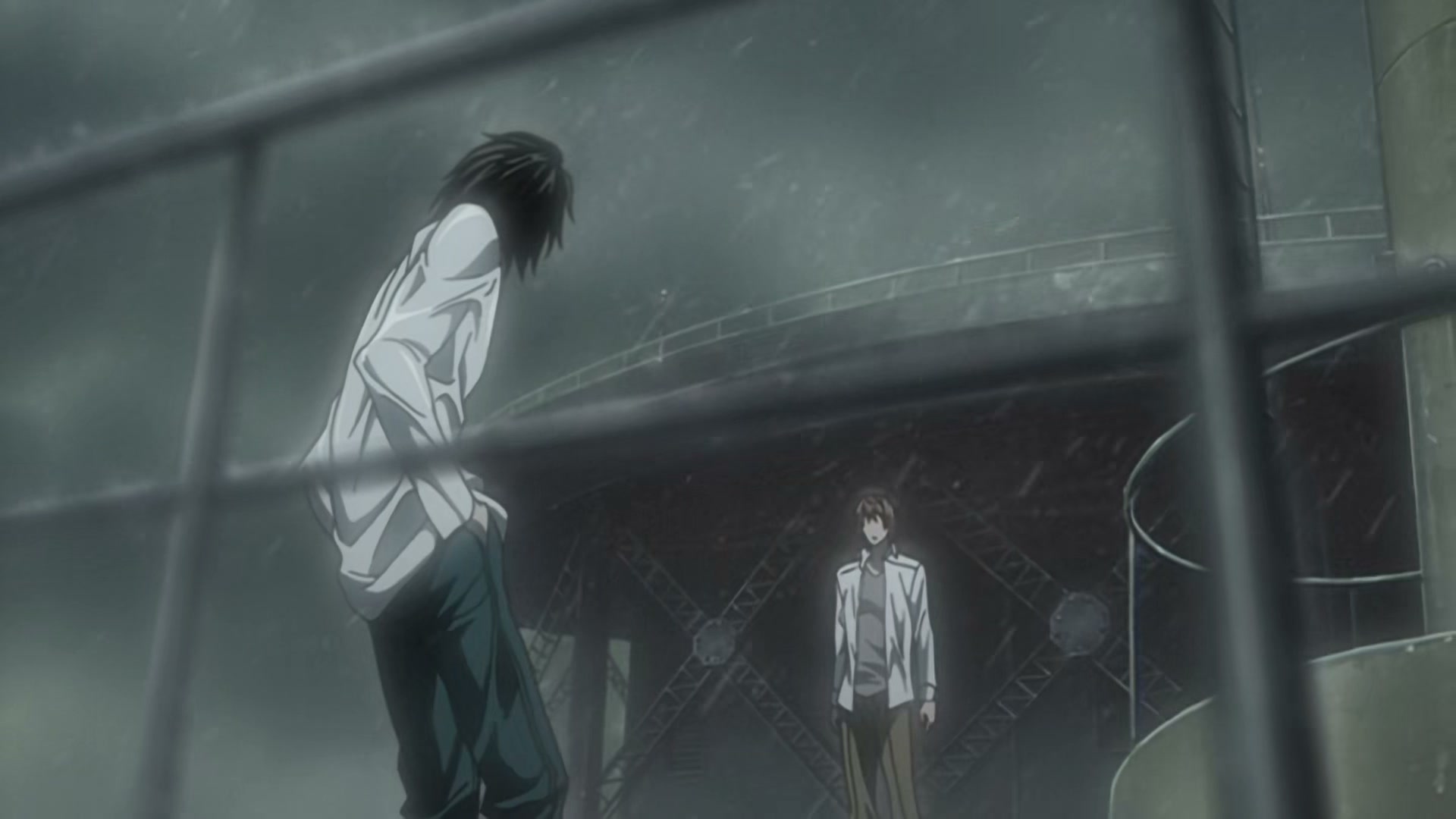
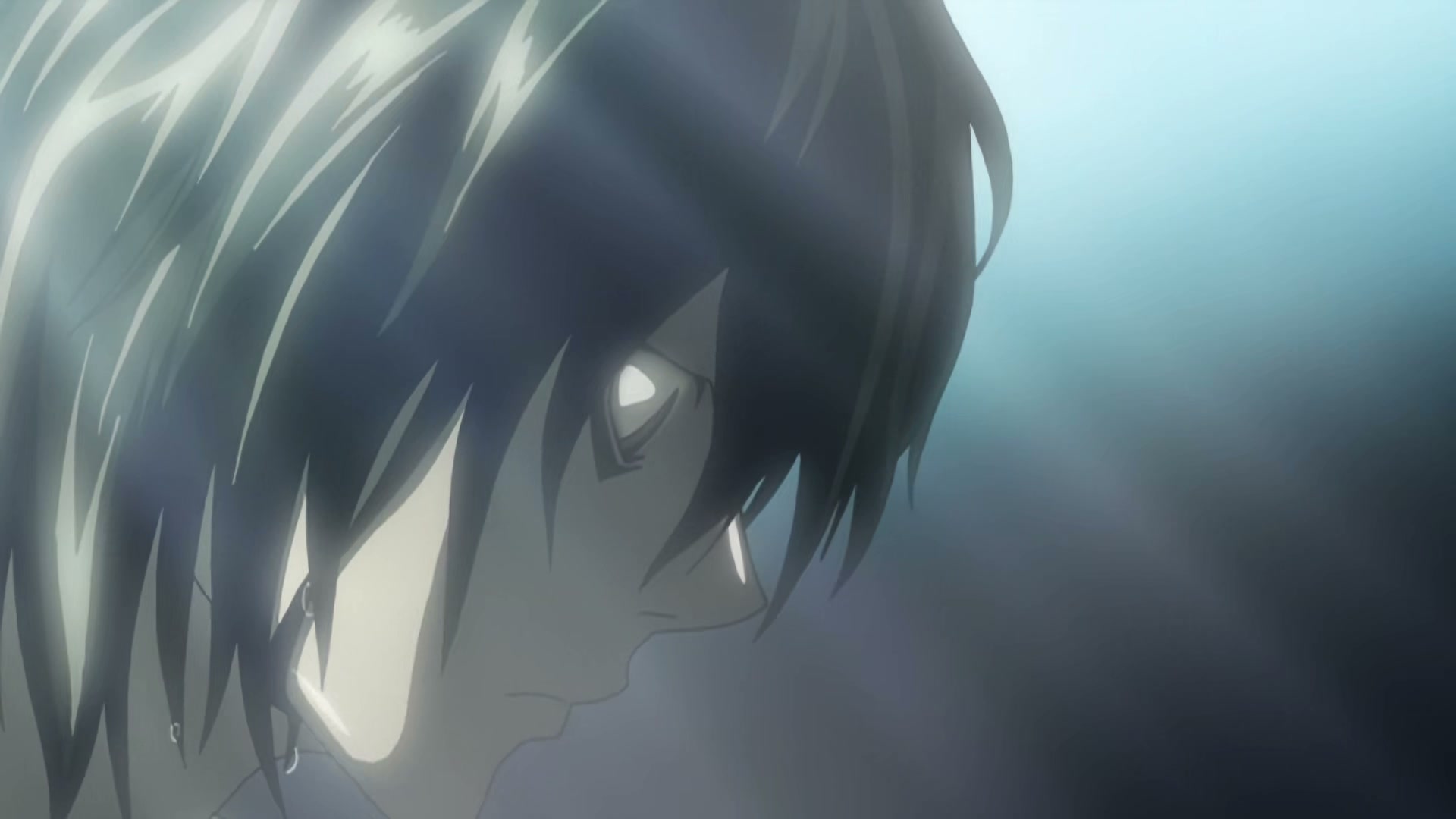
Then comes the scene that has fueled nearly twenty years of Death Note arguments. L dries Light's feet.
The Biblical reading is impossible to miss. In the Gospel of John, Jesus washes his disciples' feet shortly before his betrayal, with Judas in the room. Here the anime puts L at Light's feet just before Light's plan kills him. That doesn't make L a Christ figure and Light a Judas in any literal sense. Death Note has always borrowed Christian imagery because it looks grand enough for a story about a teenager declaring himself God. But here the symbolism earns its place. L is serving the man who is betraying him. Light knows it. L may know far more than he can prove. Neither one says it.
It's theatrical, and Araki pushes harder than Ohba ever needed to. It also works, because Episode 25 is not trying to make L's death surprising. It is trying to make it hurt.
Then everything goes quiet
The title is Silence, and when the killing starts, the episode refuses to stage it as a climax. L announces the test. Rem makes her decision. Watari goes first, collapsing at his terminal, and with his last act he triggers the deletion of the investigation data he was trusted to protect. L knows immediately that something catastrophic has happened. Then his own heart stops.For the whole series, Light and L have survived on preparation. Every attack draws a counterattack and every revelation another layer of strategy. When L dies, there is nothing left to calculate. He falls from his chair, Light catches him, and for a moment they look straight at each other. Then Light smiles.
That small expression does more than any victory speech could. L spent the entire investigation insisting Light Yagami was Kira and never gathered enough proof to make it stick. As he dies in Light's arms, Light gives him the answer anyway. L was right. He just loses before he can prove it.
Rem dies too, crumbling to dust under the rule that kills a Shinigami who uses the notebook to extend a human life. Light finds her notebook in what's left and takes it. Watari is gone, Rem is gone, L is gone, and Light walks away holding another Death Note. It is hard to imagine a more complete victory, and that is exactly why it feels so rotten.
April 2007 and the fansub race
When L died, the English-speaking world found out from a fansub.Death Note was already one of the most contested fansub shows of its season. Our Fansub & Scanlation History page tracks three groups with Episode 1 out on October 7, 2006, four days after the premiere. The license thinned that field. Viz Media announced its download rights in January 2007, and Live-eviL dropped the show at Episode 12 because of it. Toriyama's World's run stops at the same point.
The rest kept going. By the time "Silence" aired, at least three groups were still releasing Death Note week to week. Animanda had been there since Episode 1 and would last through Episode 31. C1Anime was one episode from the end of its run, which stops at 26. Kuro-Hana, which entered around Episode 17 and carried the back half through 35, often shipped the same episode twice: once as XviD in AVI, once as x264 in Matroska. L's death circulated in both generations of fansub video at the same time. The official rollout caught up fast after that. Viz's first DVD arrived November 20, 2007. Adult Swim premiered the dub at midnight on Saturday, October 20, 2007, and Episode 25 reached American television in April 2008, with the finale airing that July. The network kept Death Note in rotation until January 2010. In barely a year, the show went from a weekly fansub race to one of the defining late-night anime broadcasts of its era, and Episode 25 sits right on that fault line.
Why it still matters
"Silence" stays among the most remembered episodes of the series because Death Note is never the same afterward, and the anime makes that break land harder than the manga does. L dies in Chapter 58 of 108, a little past the manga's halfway point. In the anime it happens in Episode 25 of 37, more than two-thirds of the way through. The first Light-versus-L conflict gets twenty-five episodes to breathe. Nearly half the manga, the entire Near and Mello succession, gets compressed into twelve. That is why so many anime viewers remember L's death as the moment the show changed shape. The manga still has half its story left. The anime has just lost its co-lead. The staff seem to have known it, too. Episode 26 spends its entire first half with L narrating the case from the beginning, an account he left behind as a record of his work. The anime gives L the last word, then lets Light delete it.Judged as an episode rather than as the dividing line in the adaptation, Silence is remarkable. It takes a death the manga delivers quickly and lets the anime mourn L before he is gone. The bells, Watari, the rain, the rooftop and the foot-drying all exist to create the feeling of an ending before the characters reach it. There is manipulation in that. The Biblical imagery is not subtle, and the episode pushes L toward a vulnerability his manga counterpart rarely shows. I don't care.
For twenty-four episodes, L and Light have been staring across the same board pretending the game was still undecided. Episode 25 lets L look across it one last time. Then Light knocks the board over.
L solves the case.
Light wins anyway.

Reviewing
Death Note
View anime detail →
