DARK SCHNEIDER
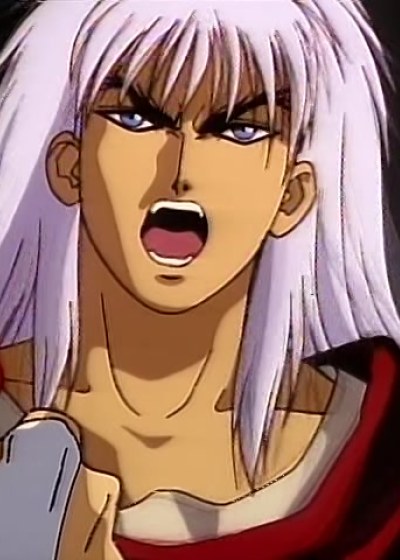
DS
The most feared wizard of the old era is resurrected inside Lucien Renlen when Meta-llicana becomes desperate enough to need him. Dark Schneider is vain, vindictive and overwhelmingly powerful, with the personality of a former conqueror rather than a conventional hero. His great contradiction is Yoko: however loudly he claims to care only about himself, threats to her repeatedly decide which side of a battle he is actually on.
DARK THROUGH THE ARCHIVE //
BASTARD!! WATCH GUIDE //
Open page →Dark Schneider Is the Emergency Weapon, Not the Chosen Hero
Open →Meta-llicana does not summon Dark Schneider because anyone trusts him.
Geo helped stop him fifteen years earlier and then sealed him inside Lucien. When the Four Lords of Havoc push the kingdom past what its normal defenses can handle, the old enemy becomes the weapon nobody wanted to use again.
Geo helped stop him fifteen years earlier and then sealed him inside Lucien. When the Four Lords of Havoc push the kingdom past what its normal defenses can handle, the old enemy becomes the weapon nobody wanted to use again.
How you can tell
Dark Schneider's first instinct after returning is not to save the kingdom. It is to settle an old score with Geo. Yoko has to redirect him toward the actual attack.
Why it matters
The OVA gets its basic tension from using a former conqueror as the kingdom's last line of defense. Every victory solves one problem while reminding everyone why he was sealed away in the first place.
Each Episode Is Built Around One New Threat
Open →The six-episode structure is unusually easy to read once you notice the pattern.
Episode 1 revives Dark Schneider. Episode 2 introduces Efreet. Episode 3 resolves Gara. Episode 4 centers Di-Amon. Episode 5 centers Arshes Nei. Episode 6 turns Abigail into the immediate final threat.
Episode 1 revives Dark Schneider. Episode 2 introduces Efreet. Episode 3 resolves Gara. Episode 4 centers Di-Amon. Episode 5 centers Arshes Nei. Episode 6 turns Abigail into the immediate final threat.
How you can tell
The episode titles almost function like a boss list.
Why it matters
The OVA compresses a larger manga arc by making each episode carry one major opponent and one relationship change. That is why transitions can feel abrupt even when the overall direction is clear.
Yoko Controls Dark Schneider Without Being Stronger Than Him
Open →Yoko cannot overpower Dark Schneider and rarely wins an argument by matching his ego.
What she has is leverage nobody else does. Her kiss awakens him, another kiss can return him to Lucien, and her emotional reactions repeatedly matter more to him than threats from priests, kings or enemies.
What she has is leverage nobody else does. Her kiss awakens him, another kiss can return him to Lucien, and her emotional reactions repeatedly matter more to him than threats from priests, kings or enemies.
What changed
The kingdom thinks it is reviving a weapon. Yoko immediately turns that weapon into a relationship.
Why it matters
Dark Schneider can ignore authority. He has a much harder time ignoring the one person whose disappointment actually reaches him.
Myth: Episode 6 is a complete ending to BASTARD!!
Episode 6 gives the OVA a real climax, but it does not close the larger conflict.
Dark Schneider returns, the Cyclops is destroyed and Abigail is defeated. Kall-Su is still outside the immediate battle, the larger threat around Anthrasax remains, and the manga story continues far beyond what these six episodes adapt.
Dark Schneider returns, the Cyclops is destroyed and Abigail is defeated. Kall-Su is still outside the immediate battle, the larger threat around Anthrasax remains, and the manga story continues far beyond what these six episodes adapt.
Why it matters
The OVA works best as a complete 1990s adaptation of one early movement, not as a substitute for the entire BASTARD!! story.
Lucien Is More Than the Place Dark Schneider Is Stored
Open →The Lucien and Dark Schneider switch is funny on the surface because their personalities could hardly be further apart.
But the shared body keeps the series from treating Dark Schneider as an outside monster that can simply be pointed at an enemy and dismissed afterward. Lucien's ordinary life, his bond with Yoko and the body's ability to change back all remain present inside every decision to unleash the sorcerer.
But the shared body keeps the series from treating Dark Schneider as an outside monster that can simply be pointed at an enemy and dismissed afterward. Lucien's ordinary life, his bond with Yoko and the body's ability to change back all remain present inside every decision to unleash the sorcerer.
Why it matters
The story never lets Dark Schneider become a clean superhero identity. Saving Meta-llicana always means putting Lucien back inside the same danger.
Episodes 2 through 5 are not just a line of stronger bosses.
Gara begins as the enemy who abducts Yoko, then comes back to Dark Schneider's side after their duel. Di-Amon survives defeat only by being forced into obedience. Arshes Nei begins under a curse and ends free of the people using her against Dark Schneider.
Gara begins as the enemy who abducts Yoko, then comes back to Dark Schneider's side after their duel. Di-Amon survives defeat only by being forced into obedience. Arshes Nei begins under a curse and ends free of the people using her against Dark Schneider.
What changed
Each confrontation adds another piece of Dark Schneider's past to the group defending Meta-llicana.
Why it matters
By the finale, the kingdom is being protected partly by the same people who were attacking it. The party is built out of repaired or forcibly redirected relationships, not recruitment speeches.
DARK SCHNEIDER & THE LORDS OF HAVOC //
Open page →Dark Schneider Says He Is Selfish More Often Than He Acts Selfish
Open →Dark Schneider never stops advertising himself as vain, cruel and interested mainly in his own appetites.
The OVA keeps testing that claim against his actions. He destroys Kevidubu after Yoko is endangered, pushes through Gara's fortress to recover her, saves Gara after their duel and ultimately chooses Arshes Nei's life over his own safety.
The OVA keeps testing that claim against his actions. He destroys Kevidubu after Yoko is endangered, pushes through Gara's fortress to recover her, saves Gara after their duel and ultimately chooses Arshes Nei's life over his own safety.
How you can tell
His dialogue tells you what kind of man he wants everyone to think he is. His choices around Yoko and his former companions tell you where the limits of that performance actually are.
Why it matters
The contradiction is the character. Making him secretly nice would flatten him. Letting him remain awful while still having attachments is what gives the OVA something to work with between explosions.
Power Never Makes Dark Schneider Obedient
Open →Meta-llicana gets exactly what it asks for when Dark Schneider returns: overwhelming magical force.
What it does not get is command authority. Geo can release him, Sheila can travel beside him and the kingdom can benefit from him, but none of those relationships make him a conventional servant.
What it does not get is command authority. Geo can release him, Sheila can travel beside him and the kingdom can benefit from him, but none of those relationships make him a conventional servant.
Why it matters
The OVA avoids the easy version of the sealed-superweapon story. Releasing Dark Schneider solves the power shortage while creating a control problem that never really goes away.
Gara, Arshes Nei, Kall-Su and Abigail are more useful to the OVA than four unrelated villains would have been.
They all come from the same history, but they respond to Dark Schneider's absence differently. Gara carries wounded loyalty. Arshes is emotionally bound to him while being coerced against him. Abigail treats the old connection as something to manipulate. Kall-Su remains beyond the six-episode ending.
They all come from the same history, but they respond to Dark Schneider's absence differently. Gara carries wounded loyalty. Arshes is emotionally bound to him while being coerced against him. Abigail treats the old connection as something to manipulate. Kall-Su remains beyond the six-episode ending.
Why it matters
The campaign against Meta-llicana is also a delayed argument over what Dark Schneider's old empire meant to the people who helped build it.
Gara's duel with Dark Schneider works because the sword fight is carrying an older grievance.
He was once one of Dark Schneider's followers. By the time they finally face each other, the argument is about loyalty, abandonment and whether the old relationship meant anything after Dark Schneider disappeared.
He was once one of Dark Schneider's followers. By the time they finally face each other, the argument is about loyalty, abandonment and whether the old relationship meant anything after Dark Schneider disappeared.
What changed
Dark Schneider saving Gara at the end matters more than simply beating him.
Why it matters
The rescue gives Gara an answer he can believe. His return to Dark Schneider's side grows out of the duel instead of happening because the plot suddenly needs another ally.
Di-Amon enters the story believing regeneration has removed the ordinary consequences of losing a fight.
Dark Schneider does not need to prove that immortality is fake. He needs to show that an immortal enemy can still be trapped, cursed and forced to live with the result.
Dark Schneider does not need to prove that immortality is fake. He needs to show that an immortal enemy can still be trapped, cursed and forced to live with the result.
What changed
The advantage Di-Amon is proudest of becomes the reason defeat cannot give him an escape.
Why it matters
BASTARD!! often wins fights by changing the rule that matters rather than simply making the next blast larger.
Arshes Nei is dangerous enough to carry an episode as Dark Schneider's equal, but power is not the real trap.
Abigail's curse makes loyalty itself lethal. If Arshes refuses to kill Dark Schneider, she dies. If Dark Schneider treats the duel like an ordinary contest and kills her first, Abigail still gets what he wants.
Abigail's curse makes loyalty itself lethal. If Arshes refuses to kill Dark Schneider, she dies. If Dark Schneider treats the duel like an ordinary contest and kills her first, Abigail still gets what he wants.
The Breakdown
The fight can only be won by finding a third outcome that breaks the curse without choosing either death it was designed to force.
Why it matters
That is why Dark Schneider tearing out his own heart is not just shock value. It is the only move that rejects the terms of the fight.
MAGIC, METAL & MONSTERS //
Open page →The Efreet fight is more than a rescue obstacle.
Dark Schneider enters Gara's fortress facing a weapon specifically built around fire magic, overcomes it and then carries the captured blade forward. The victory changes what he has available for the next confrontation instead of resetting him to the same loadout.
Dark Schneider enters Gara's fortress facing a weapon specifically built around fire magic, overcomes it and then carries the captured blade forward. The victory changes what he has available for the next confrontation instead of resetting him to the same loadout.
What changed
The episode turns an enemy tool into part of Dark Schneider's arsenal.
Why it matters
For a six-episode OVA moving this quickly, carrying consequences from one fight into the next helps the battles feel connected instead of completely disposable.
The Heavy-Metal Names Are Not Background Easter Eggs
Open →BASTARD!! does not hide its music references in the background.
Hagiwara builds kingdoms, monsters, spells and character names out of heavy-metal language. The joke is structural enough that the fantasy world starts sounding like a record collection translated into swords and sorcery.
Hagiwara builds kingdoms, monsters, spells and character names out of heavy-metal language. The joke is structural enough that the fantasy world starts sounding like a record collection translated into swords and sorcery.
How you can tell
Meta-llicana, Anthrasax and Dark Schneider are only the most obvious layer. Once you hear the pattern, the setting stops pretending the references are accidental.
Why it matters
The metal vocabulary tells you how seriously to take the pose. BASTARD!! can stage an apocalyptic magical duel and still knowingly behave like it wants the duel printed on an album cover.
BASTARD!! looks like a pure escalation show because the magic is loud and the characters talk in enormous terms.
But several of the decisive turns are rule problems. Efreet is a weapon to overcome and claim. Gara's duel changes because Dark Schneider saves him. Di-Amon's regeneration becomes something that can be exploited. Arshes cannot simply choose not to fight because the curse punishes that choice.
But several of the decisive turns are rule problems. Efreet is a weapon to overcome and claim. Gara's duel changes because Dark Schneider saves him. Di-Amon's regeneration becomes something that can be exploited. Arshes cannot simply choose not to fight because the curse punishes that choice.
Why it matters
Watching for the rule of each fight makes the OVA easier to follow than trying to maintain one clean numerical power scale.
English Localization Blurred Some of the Music Jokes
Open →The English release history adds another layer to the naming gag.
Pioneer and Viz altered a number of band-derived names rather than reproducing every reference directly. That means an English viewer can hear or read names that are close to the joke without seeing exactly the same joke a Japanese reader would recognize.
Pioneer and Viz altered a number of band-derived names rather than reproducing every reference directly. That means an English viewer can hear or read names that are close to the joke without seeing exactly the same joke a Japanese reader would recognize.
Why it matters
When two BASTARD!! fans remember a place, spell or monster under slightly different names, they may both be remembering legitimate versions of the same localization history.
Episode 6 certainly makes the threat larger, but the return of Dark Schneider only works because the previous episodes have already changed the people around him.
Gara is no longer an enemy. Arshes is no longer fighting under Abigail's curse. Yoko refuses to accept that Dark Schneider is simply gone. When he returns, the defenders around him are not the same group that existed in Episode 1.
Gara is no longer an enemy. Arshes is no longer fighting under Abigail's curse. Yoko refuses to accept that Dark Schneider is simply gone. When he returns, the defenders around him are not the same group that existed in Episode 1.
Why it matters
The Cyclops gives the finale spectacle. The rebuilt loyalties are what make the spectacle feel like a conclusion to the six episodes that came before it.
The OVA's Abruptness Comes From Compression, Not From Six Unrelated Stories
Open →Myth: The 1992 OVA is basically six disconnected fantasy episodes.
The transitions can be sharp because the OVA is compressing an existing manga arc into six short episodes.
The through-line remains consistent: revive Dark Schneider, recover Yoko, resolve former allies, confront the Lords of Havoc and stop the immediate Anthrasax crisis.
The through-line remains consistent: revive Dark Schneider, recover Yoko, resolve former allies, confront the Lords of Havoc and stop the immediate Anthrasax crisis.
Why it matters
The missing connective tissue is real, but so is the structure underneath it. Treating each episode as one movement in the Dark Rebel Army conflict makes the adaptation much easier to read.
